
The Water Came From Upstairs: How HOA Insurance Claims Actually Work
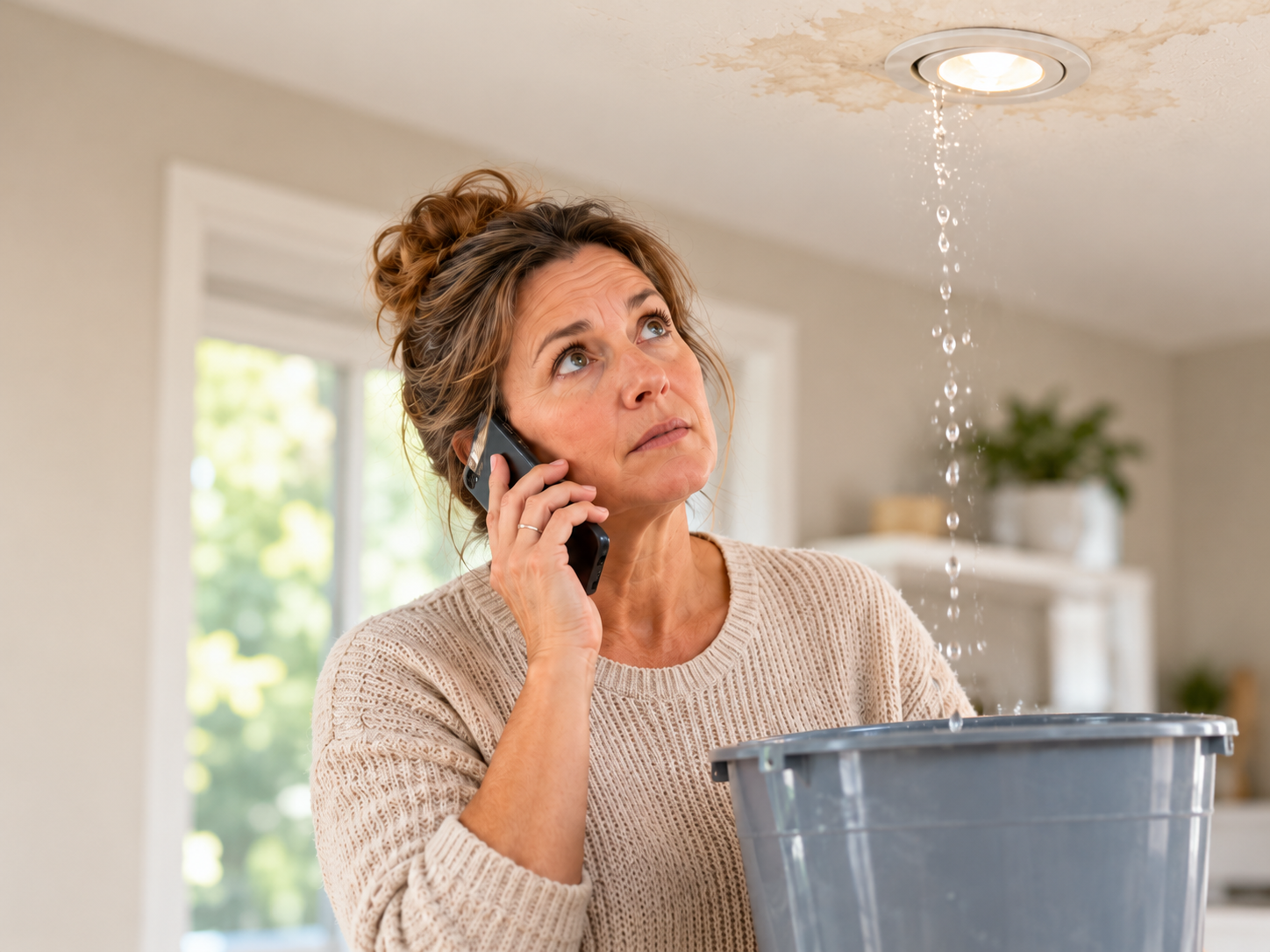
It usually starts with a phone call: there’s water coming through the ceiling. In an HOA community, that moment raises two urgent questions at once. How do we stop the damage? And whose insurance pays for it?
Water damage is one of the most common insurance claims in community associations, and it’s also one of the most misunderstood. Here’s how claims typically work, what homeowners and boards should do in the first 24 hours, and how to avoid the surprises that turn a bad day into a long one.
Step 1: Stop the Damage First
Before anyone talks about insurance, the priority is stopping the water. That means knowing where your unit’s water shutoff is, reporting the leak right away, and getting a professional on site. Every hour matters with water. Damage that could have been a drywall patch can turn into a flooring replacement, mold remediation, or damage to the units below.
Homeowners should report water issues to the RowCal Care Team immediately, even if the source seems to be inside another unit. Common-element pipes, roofs, and building systems may be the association’s responsibility, and the association needs to know fast.
Step 2: Document Everything
Take photos and video of the damage, the source if visible, and anything affected. Note dates and times, who you spoke with, and what was done. Good documentation helps every party involved, from the adjuster to the board to the owner next door.
Step 3: Figure Out Whose Policy Responds
This is where governing documents matter. Most associations carry a master policy that covers what the association is responsible for, often common areas and portions of the building structure. Owners carry their own HO-6 (condo) or HO-3 (single-family) policy for what the association’s policy doesn’t cover, like personal belongings, liability, and frequently interior finishes and improvements.
Where the line falls depends on your declaration or CC&Rs, your association’s insurance and maintenance policies, and sometimes state law. The source of the water and the cause of the leak can also matter. That’s why the same leak might be handled differently in two communities across the street from each other.
Step 4: Understand the Deductible
Even when the master policy responds, someone pays the deductible. Many associations’ governing documents allow the deductible to be charged back to the owner of the unit where the damage started, especially if negligence is involved. Master policy deductibles have also grown in recent years, and some are set as a percentage of the building’s insured value.
This is exactly where loss assessment coverage on an owner’s personal policy can help. It may cover an owner’s share of an association deductible or special assessment after a covered loss. Owners should ask their agent what their limit is and how it lines up with the association’s deductible. For a deeper look, see RowCal’s guide to the HO-6 vs. master policy: https://www.rowcal.com/news/ho-6-policy-vs-hoa-master-policy-what-condo-owners-need-to-know/
Step 5: Restore and Follow Through
Once the source is fixed and responsibility is sorted out, restoration begins: drying, mitigation, repairs, and final inspections. A clear point of contact makes a big difference here, especially when several units, several insurance carriers, and an adjuster are involved.
At RowCal, our 24/7 emergency maintenance team helps secure, control and stop the emergency. We also have the resources to complete restoration and coordinate with adjusters.
What Boards Can Do Now
- Review your governing documents and insurance policy so you know where the master policy ends and owner responsibility begins.
- Adopt or update a clear insurance deductible policy, and share it with owners.
- Remind owners every year to check their HO-6 or HO-3 coverage and loss assessment limits.
- Make sure owners know exactly how to report a water emergency, including after hours.
The Bottom Line
Water damage is stressful, but it doesn’t have to be chaotic. When homeowners know the first steps and boards have clear policies in place, claims move faster and neighbors stay neighbors.
Ready for a team that can handle claims, restoration, and the details in between? RowCal doesn’t just strive to meet industry standards; we aim to set them. Connect with us: https://www.rowcal.com/learn-more/
This article is general information, not legal or insurance advice. For guidance specific to your association, consult your governing documents, insurance professional, and attorney.