
When the flakes fly, a different kind of flurry begins in community inboxes – the blizzard of questions about snow removal!
It’s understandable! Winter is stressful, and everyone wants a clear driveway.
At RowCal, we believe The Smarter Way to HOA means transparency.
So, let’s clear the air by busting the biggest myths about snow removal and what really happens after the snow falls!
Myth 1: Plows Should Be Out When the Snow Starts.
FACT: Your contractor is strategically scheduled to operate after hitting a specific trigger depth.
Many residents assume the snow plows and crews deploy the moment the first few flakes cover the ground.
However, professional contracts are tied to trigger depths, which are often 2–3 inches, depending on the community makeup and budget allowance.
This threshold is necessary to reduce costs and to prevent contractors from making inefficient trips that don’t actually move enough snow to make a difference.
This strategy ensures resources are used efficiently for the deepest, safest clearings.
Myth 2: Lined Blades Should Always Be Used.
FACT: It depends on which is a priority to your association – preserving pavement, or clearing down to blacktop clearing.
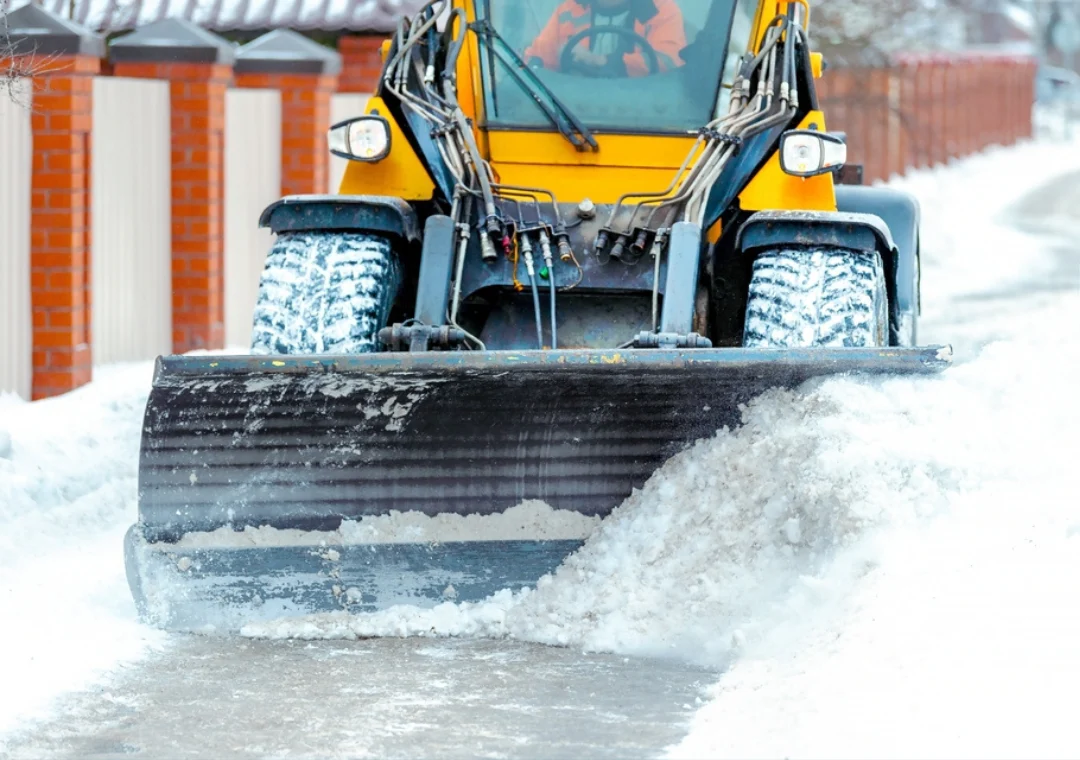
We often get asked when helping to scope winter services if a vendor should use silicone-lined blades on their plows. While lined plows + buckets can be great at reducing aggressive scraping and scuffs (especially on newer asphalt and recently sealed surfaces) there’s often a tradeoff.
Because they don’t cut as hard, they often won’t scrape all the way down to bare pavement, which can then leave a thin, packed layer that gets slick. In cooler temperature zones, this is often the hardest to melt/remove, especially on building elevations that don’t get much sun.
That’s where it gets tricky: if a resident’s expectation is “down to blacktop,” the solution is usually more de-icing product (salt/brine) and/or traction (sand) to break up that residual layer. And while that helps with safety, extra salt and sand can also be hard on pavement and sealcoat over time (and will add cleanup costs + turf damage in spring).
There isn’t one perfect answer, and here are just a few things to think of for your community’s priorities:
✔️ Cosmetic: While it may look like damage, it’s often just cosmetic scraping on the sealcoat layer, not actual harm to the underlying asphalt
✔️ Conditions: Steep driveways, shaded lanes, and north-facing sections often need a different approach (and sometimes more traction/de-icer) than flatter, sunny areas that naturally melt faster
✔️ Costs: “Serviceable and safe” is a different scope than “bare pavement.” Getting to bare pavement can require extra passes, more de-icer, and sometimes hand shoveling or sweeping/detailing, and all of that adds time and cost
Myth 3: The Plow Driver Didn’t Do Their Job If There is Snow Between Cars.
FACT: The plow can only clear the areas left empty by vehicles.
This is a classic problem!
What the plow goes around, the wind piles up.
If cars are parked in the lot or along the curb during a full-lot service, the driver has to circle them. This is an unavoidable operational barrier.
For a 100% clean sweep of any parking area, residents must follow community alerts and move their vehicles to address large amounts of snow.
By knowing the strategy behind the snow removal plan, residents and management can prepare for winter better and reduce frustration all season long.
If you’re looking for a management partner who brings expert planning, transparency, and seamless communication to every operational challenge, it’s time for The Smarter Way to HOA. Contact us today!